What Are Healthcare Billing Systems and How Do They Work?
How can healthcare providers manage payments, insurance claims, and patient billing more efficiently? Healthcare billing systems make these processes easier by organizing financial information, automating billing tasks, and helping healthcare facilities manage payments accurately. These systems play an important role in connecting medical services with financial operations.
As healthcare organizations handle increasing numbers of patients, insurance claims, and administrative responsibilities, managing billing manually can become complicated. Digital billing solutions help hospitals, clinics, and medical practices simplify financial workflows while reducing repetitive tasks and improving operational efficiency.
What Are Healthcare Billing Systems?
***[Healthcare billing systems](https://medcore.software/blog/healthcare-billing-systems/)*** are digital software solutions designed to manage the financial activities associated with medical services. They help healthcare providers generate invoices, process insurance claims, record payments, track outstanding balances, and maintain billing records.
These systems bring different billing activities together on a centralized platform, making it easier for administrative teams to access financial information and manage patient accounts.
Depending on the software, common capabilities include:
Patient billing and invoice generation
Insurance information management
Medical claim processing
Payment tracking and recording
Billing reports and financial analytics
Outstanding balance management
By organizing these activities, healthcare facilities can improve financial accuracy and reduce the administrative workload associated with billing.
How Do Healthcare Billing Systems Work?
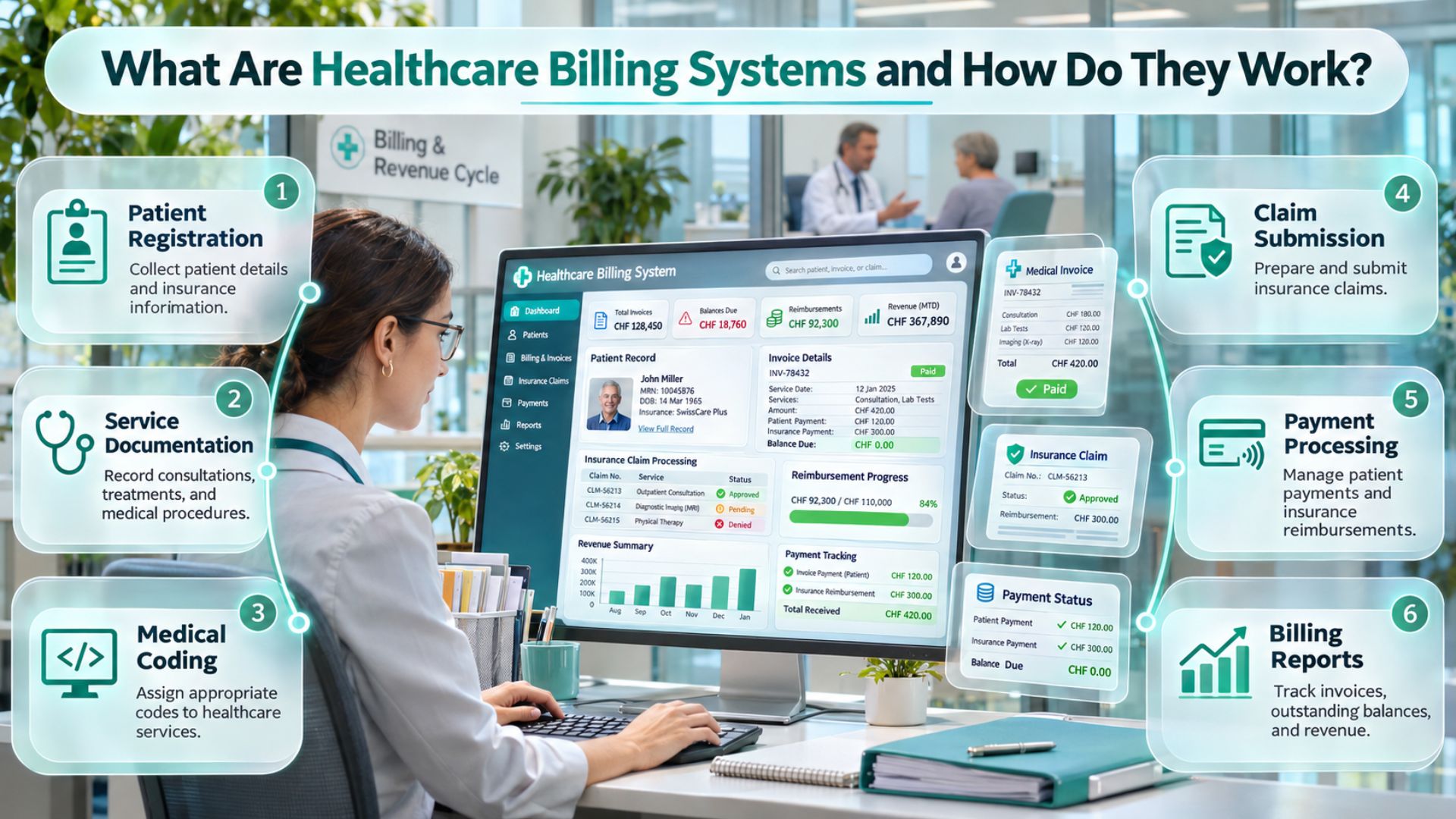
A healthcare billing workflow typically begins when a patient registers for medical services and continues until the provider receives payment and resolves any outstanding balance.
Here are six important steps involved in the process.
1. Patient Registration and Information Collection
The process starts with collecting patient details, including personal information, contact details, insurance information, and relevant billing records. Accurate information helps prevent administrative mistakes and supports smoother billing operations.
2. Insurance Verification
The system helps staff check insurance details and available coverage before providing services. This allows healthcare providers to identify potential coverage issues and understand applicable payment responsibilities.
Some solutions also support prior authorization workflows when approval is required by an insurance provider.
3. Medical Coding and Charge Entry
After a consultation, diagnosis, or medical procedure, relevant service information is documented and translated into appropriate billing codes. Depending on the healthcare system, standardized codes such as ICD-10, CPT, and HCPCS may be used.
The billing team then records the applicable charges to prepare accurate claims and invoices.
4. Claim Generation and Submission
Once the required information is available, the software helps generate billing claims and check them for missing or incorrect details. Claims can then be submitted electronically to the appropriate insurance payer.
Automated validation can help identify common errors before submission, reducing unnecessary delays and rework.
5. Payment Processing and Recording
After reviewing a claim, the insurance provider determines the payable amount according to the patient's coverage and applicable policy conditions.
The billing system helps record insurance payments, adjustments, patient contributions, and outstanding balances. This gives administrative teams a clearer view of each patient's financial account.
6. Denial Management and Financial Reporting
If an insurance claim is rejected or denied, billing staff can review the reason, correct eligible errors, and submit an appeal or corrected claim when appropriate.
The system can also generate financial reports showing collected payments, pending claims, outstanding balances, and billing performance.
What Are the Key Benefits of Digital Healthcare Billing?
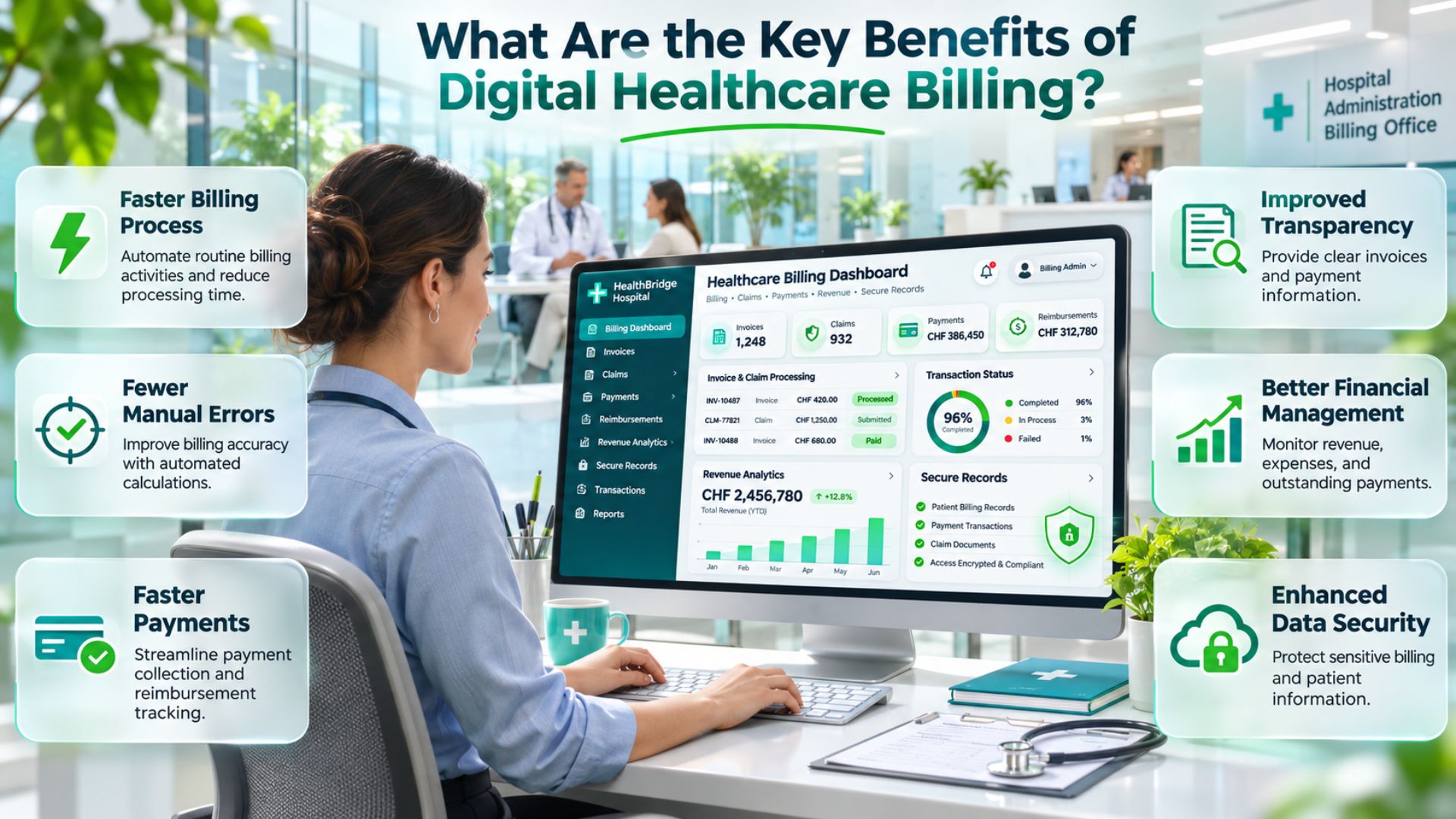
Implementing a digital billing solution can improve several aspects of healthcare administration.
Improved Billing Accuracy
Automated calculations, data validation, and standardized workflows help reduce common manual billing errors.
Faster Payment Processing
Electronic claim preparation and payment tracking can simplify financial operations and help providers follow up on pending payments.
Reduced Administrative Work
Automating repetitive tasks allows billing teams to spend less time on manual data entry and paperwork.
Better Financial Visibility
Centralized dashboards and reports help administrators monitor revenue, outstanding payments, and billing activities.
Improved Patient Experience
Clear invoices, organized payment records, and transparent billing information help patients better understand their financial responsibilities.
Better Operational Coordination
Connecting billing workflows with patient registration, electronic patient records, and other hospital departments improves information sharing and reduces duplicate data entry.
What Features Should You Look for in a Healthcare Billing Solution?
Choosing suitable software requires understanding the financial and administrative needs of a healthcare organization.
Important features to consider include patient account management, automated invoice generation, insurance claim management, payment tracking, denial management, reporting tools, role-based access, and secure data handling.
Integration capabilities are equally important. Billing software that connects with hospital information systems, electronic patient records, laboratory systems, and other healthcare applications can support smoother workflows.
Healthcare organizations should also evaluate software usability, scalability, customer support, and compliance with applicable data protection and healthcare regulations.
You can also watch: ***[Everyone is working, but the system is not connected](https://youtube.com/shorts/Ul_7E1sMpuI?si=OKm8Co1e-aeUwiJ3)***.
Conclusion
***[Healthcare billing systems](https://medcore.software/blog/healthcare-billing-systems/)*** technology helps healthcare organizations manage financial operations more effectively by connecting patient information, medical services, insurance claims, and payment activities. From patient registration and insurance verification to claim submission and payment tracking, each step contributes to a more organized billing workflow.
Selecting the right solution can help healthcare providers reduce administrative complexity, improve billing accuracy, strengthen financial visibility, and deliver a smoother patient experience.
Frequently Asked Questions
1. What is the main purpose of a healthcare billing system?
Its main purpose is to manage patient invoices, insurance claims, payments, and outstanding balances while simplifying financial operations for healthcare providers.
2. How does medical billing software work?
It collects patient and insurance information, records medical services, prepares billing claims, tracks payments, and helps manage rejected or denied claims.
3. Can billing software reduce medical billing errors?
Yes. Automated calculations, claim validation, and organized patient records can help reduce common data-entry and billing mistakes.
4. Who can benefit from healthcare billing software?
Hospitals, clinics, diagnostic centers, outpatient departments, and independent medical practices can benefit from digital billing solutions.
5. Why is billing software important for modern healthcare?
It helps healthcare organizations streamline administrative workflows, manage payments, improve financial reporting, and maintain more organized billing records.