How Can Employee Monitoring Create Greater Workplace Visibility and Better Results?
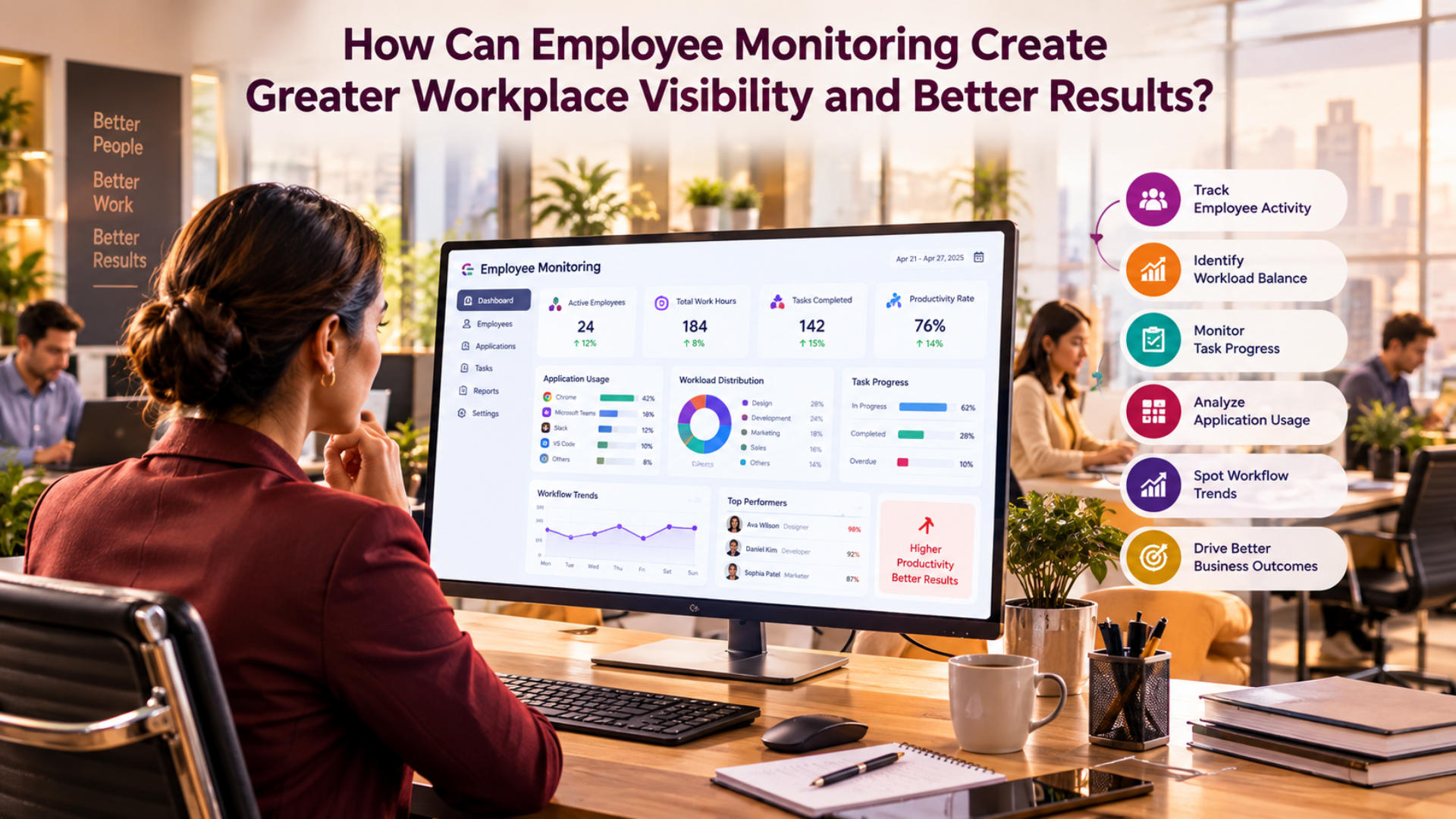
How can businesses understand what is slowing teams down without turning the workplace into an environment of constant observation? As organizations increasingly rely on remote, hybrid, and digital workflows, managers need practical ways to understand how work is progressing. Employee monitoring can provide that visibility when it is implemented with a clear purpose, transparent policies, and sensible measurements.
The goal is not simply to watch employees. Effective monitoring helps organizations identify workflow obstacles, understand resource usage, protect business systems, and make informed operational decisions. When activity data is interpreted alongside project outcomes and job responsibilities, it can become a useful management tool rather than a simple surveillance mechanism.
What Does Employee Monitoring Actually Measure?
***[Employee monitoring](https://empcloud.com/blog/employee-monitoring-and-productivity-tracking-2026-hr-picks/
)*** encompasses different technologies designed to provide insight into workplace activity. Depending on the organization's needs, monitoring may cover:
* Work hours and attendance
* Application and website usage
* Task and project activity
* Digital workflow patterns
* Time spent on specific activities
* Security-related events
* Team workload and resource utilization
The information collected can vary considerably between industries. A software company may focus on application usage and project workflows, while a customer-service organization may prioritize schedules, task completion, and response activity.
The key is selecting measurements that relate directly to legitimate business objectives.
Why Are Businesses Using Workplace Monitoring Tools?
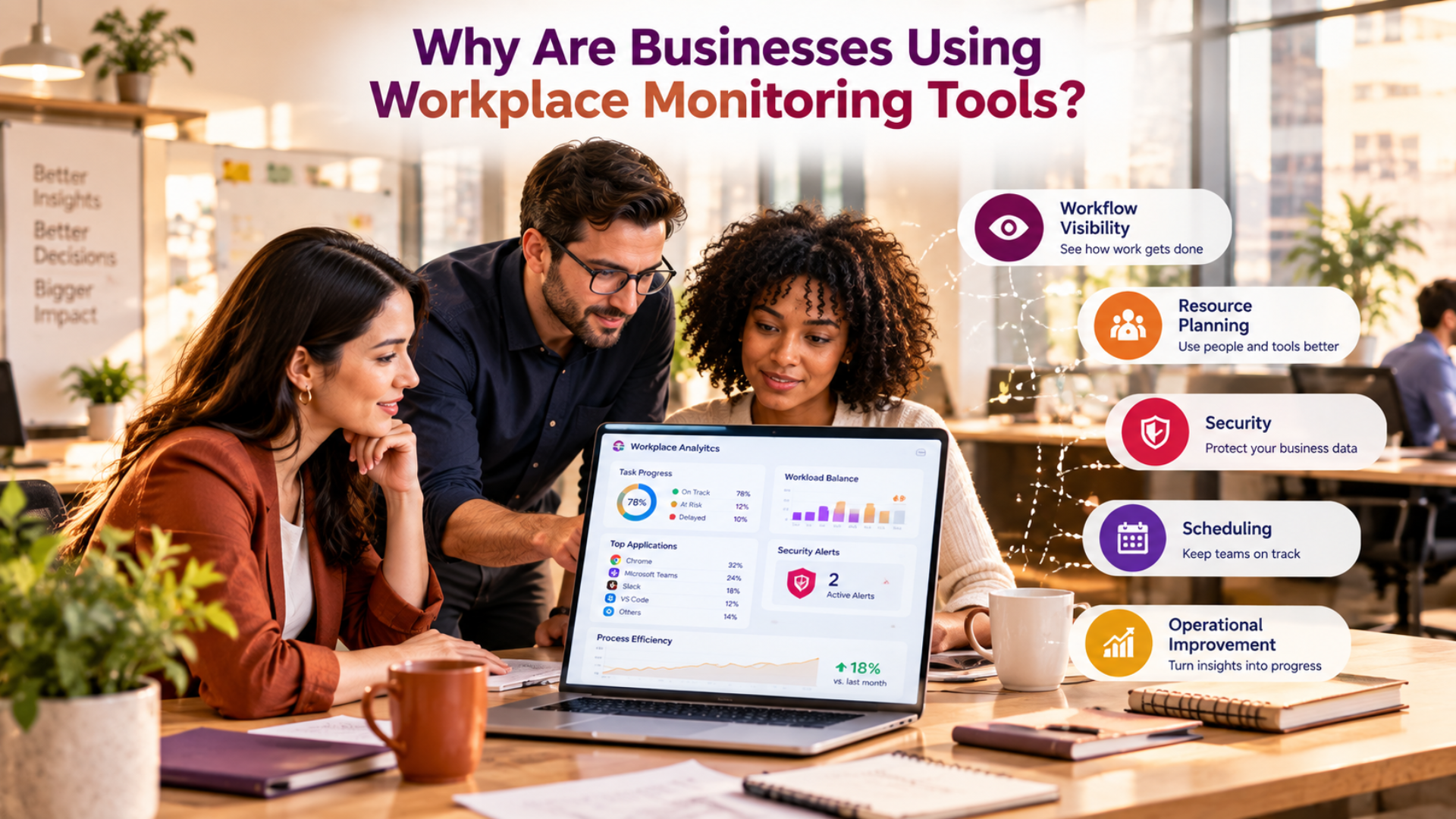
Modern workplaces can be difficult to manage using traditional methods. Employees may work across multiple locations, collaborate asynchronously, or use dozens of digital applications throughout the day.
Monitoring tools can help managers answer practical questions such as:
* Where are workflow delays occurring?
* Which processes consume excessive time?
* Are teams carrying balanced workloads?
* Are employees encountering recurring technical obstacles?
* Are working schedules aligned with operational requirements?
* Which activities could potentially be automated?
These insights can help managers address problems at their source instead of relying entirely on assumptions or occasional status meetings.
How Can Monitoring Help Improve Productivity?
The most useful workplace data reveals opportunities for improvement rather than simply counting activity.
For example, if employees repeatedly spend substantial time performing repetitive administrative tasks, management might introduce automation. If teams frequently wait for approvals, the organization could simplify its approval process. If employees struggle with unfamiliar software, targeted training may be more valuable than additional supervision.
Businesses can use monitoring insights to ***[improve productivity](https://empcloud.com/blog/how-to-improve-productivity/
)*** through several approaches:
1. Find Repetitive Work
Activity patterns can reveal tasks that consume significant amounts of employee time without directly contributing to high-value outcomes.
2. Identify Workflow Delays
Data can highlight recurring interruptions, approval bottlenecks, application problems, or communication gaps.
3. Balance Team Workloads
Managers can examine broader workload patterns to determine whether certain employees or departments consistently carry disproportionate responsibilities.
4. Improve Resource Planning
Work activity can provide additional information when organizations decide whether they need new software, additional employees, process changes, or training.
5. Evaluate Process Changes
Organizations can compare operational patterns before and after implementing a new workflow to determine whether the change produced meaningful improvements.
What Makes Monitoring Effective Rather Than Intrusive?
Technology cannot determine whether a monitoring program is appropriate by itself. The organization's implementation strategy matters considerably.
A responsible program should establish clear boundaries around data collection.
Explain What Is Being Collected
Employees should know which types of information are recorded and what those measurements are intended to accomplish.
Establish a Business Purpose
Every monitored metric should have a clear reason for existing. Collecting unnecessary information can increase privacy, security, and management challenges.
Protect Collected Information
Monitoring data can contain sensitive workplace information. Access controls, appropriate storage practices, and defined retention policies should therefore be part of the implementation strategy.
Focus on Patterns
A single activity measurement rarely explains why something happened. Managers should consider trends, workload, job responsibilities, deadlines, and other relevant circumstances before interpreting data.
Can Monitoring Support Remote and Hybrid Employees?
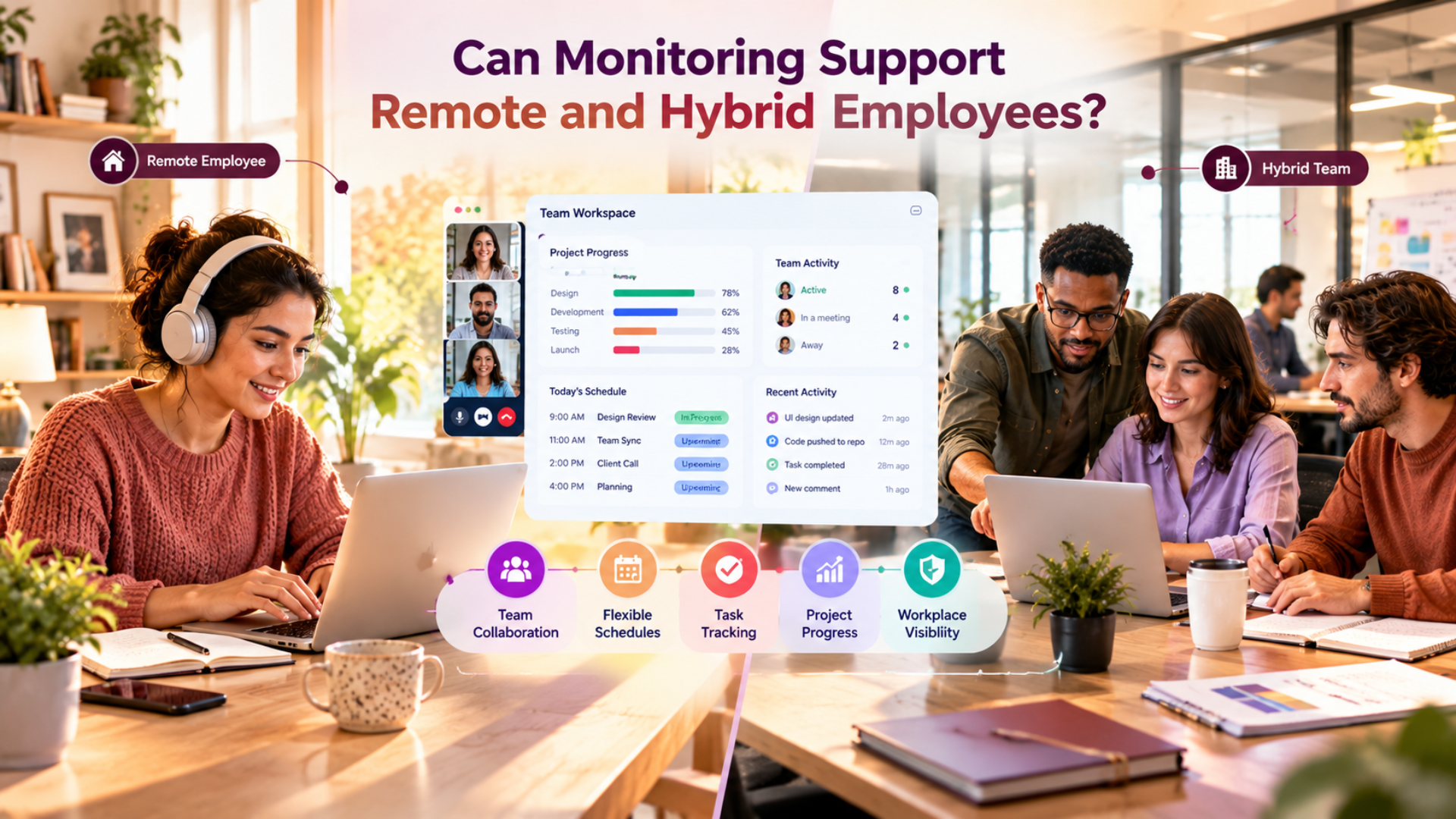
Remote work creates a different management environment because physical presence is no longer a reliable indicator of work progress.
Digital monitoring can provide additional context about schedules, application activity, project workflows, and task progress. However, managers should avoid assuming that high computer activity automatically represents high-value work.
A designer may spend hours creating a single asset. A salesperson may spend considerable time speaking with customers away from their keyboard. A manager may spend much of the day in meetings.
For these roles, meaningful performance indicators should extend beyond simple screen activity.
The strongest approach combines digital activity data with actual work outcomes.
How Do Productivity and Efficiency Differ?
The concept of ***[Productivity vs Efficiency](https://medium.com/@cloudvision14/productivity-vs-efficiency-key-differences-every-company-should-know-2b20dc0c0f7d
)*** is important when organizations interpret workplace analytics.
Productivity generally considers the amount and quality of valuable output produced. Efficiency focuses more specifically on how effectively available resources are used to achieve an outcome.
For example, imagine two teams completing the same project. One team finishes quickly but uses excessive resources and requires substantial rework. Another takes slightly longer but produces a higher-quality result with fewer wasted resources.
Looking only at completion speed would provide an incomplete picture.
Workplace analytics should therefore consider several dimensions, including:
* Output quality
* Completion rates
* Resource utilization
* Time requirements
* Customer outcomes
* Error or rework levels
* Project complexity
This broader perspective prevents managers from confusing visible activity with meaningful performance.
How Should Companies Introduce Monitoring?
A structured rollout can make implementation easier and more transparent.
Step 1: Define the objective
Determine whether the primary purpose involves workflow optimization, security, attendance, resource planning, or another legitimate business requirement.
Step 2: Select relevant measurements
Choose only metrics that help answer the organization's defined questions.
Step 3: Establish clear policies
Document what is collected, why it is collected, who can access it, and how long it is retained.
Step 4: Communicate with employees
Explain the system before implementation and provide opportunities for employees to understand how the information will be used.
Step 5: Review results regularly
Look for patterns and operational opportunities instead of automatically treating every unusual measurement as a performance problem.
Common Mistakes Organizations Should Avoid
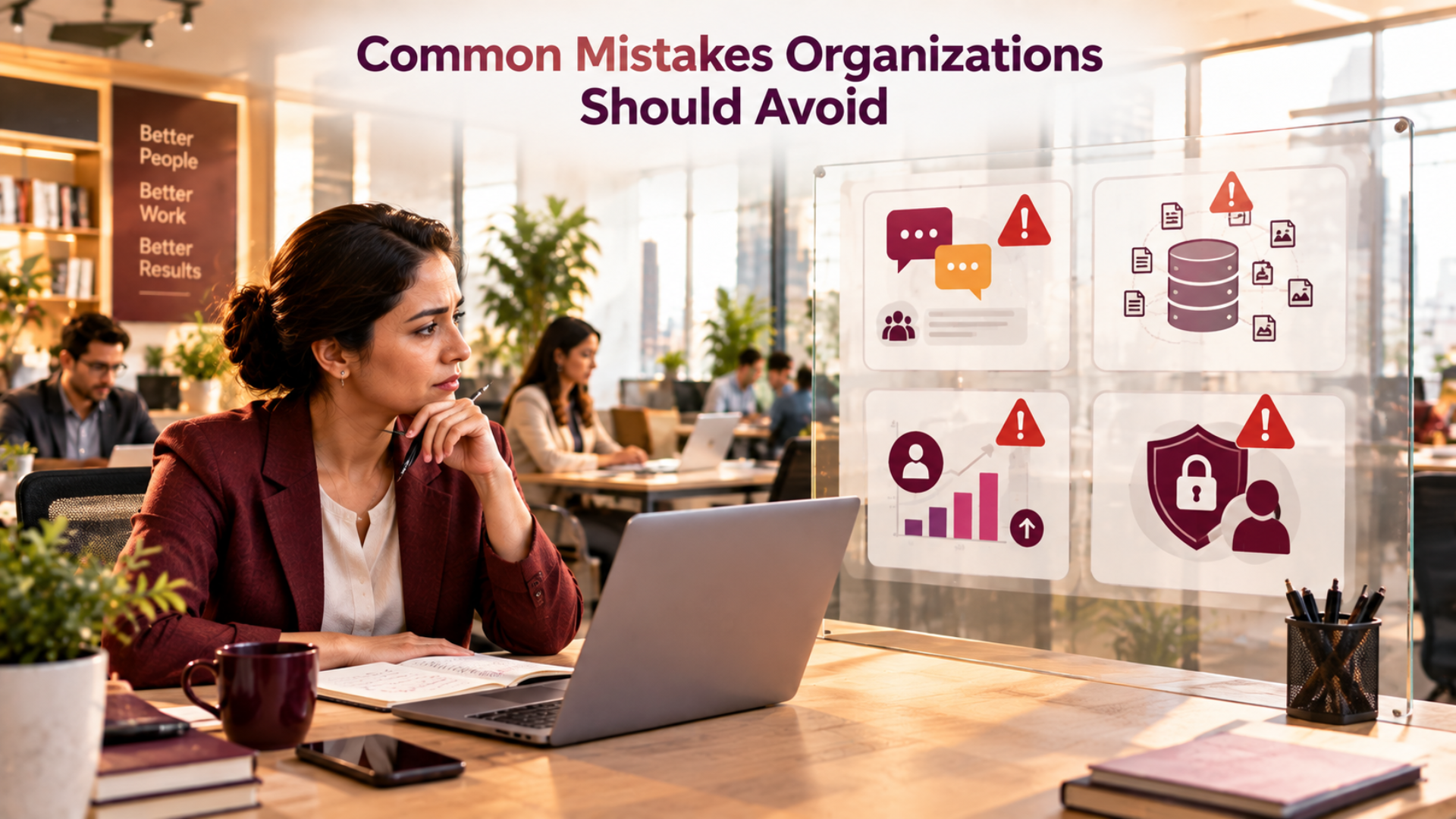
Poor implementation can reduce employee trust and make collected data less useful.
Businesses should avoid:
* Measuring keyboard activity as a complete productivity indicator
* Monitoring without clear communication
* Collecting data that serves no defined purpose
* Comparing employees with fundamentally different responsibilities
* Making decisions from isolated metrics
* Ignoring qualitative performance factors
* Giving unrestricted access to monitoring information
* Treating monitoring technology as a substitute for good management
A monitoring system should support conversations about work rather than replace them.
What Are the Long-Term Benefits?
When used thoughtfully, monitoring data can contribute to broader operational improvements. Organizations may identify inefficient processes, improve workforce planning, discover training needs, strengthen security practices, and better understand how teams interact with digital systems.
The most valuable outcome is not a larger volume of employee data. It is better information for making practical decisions.
You can also watch: ***[STORIES that CHANGE your WORK! EmpCloud Podcast #Shorts](https://youtu.be/Hdp_mvnutM4?si=Lxh8pF96FJhomCkr
)***
Summary
***[Employee monitoring](https://empcloud.com/blog/employee-monitoring-and-productivity-tracking-2026-hr-picks/
)*** can provide businesses with useful visibility into workplace activity, workflows, resource usage, and operational challenges. Its effectiveness depends on choosing meaningful metrics, protecting collected information, communicating clearly with employees, and interpreting data within the context of actual work.
Frequently Asked Questions
Is employee monitoring only useful for remote workers?
No. It can support office-based, hybrid, and remote teams by providing different forms of operational and workflow insight.
Does monitoring guarantee higher productivity?
No. Monitoring produces information. Improvements occur when organizations use that information to address workflow problems, resource limitations, training needs, or inefficient processes.
What should companies measure?
Companies should measure information directly connected to legitimate objectives, such as workflow activity, scheduling, project progress, security events, or resource utilization.
Can monitoring negatively affect workplace trust?
It can if employees do not understand what is being collected, why it is collected, or how the information will be used. Transparency and appropriate limits can help address these concerns.