**Are Micro-Creators the Smartest Choice for Cost-Effective Brand Growth?**
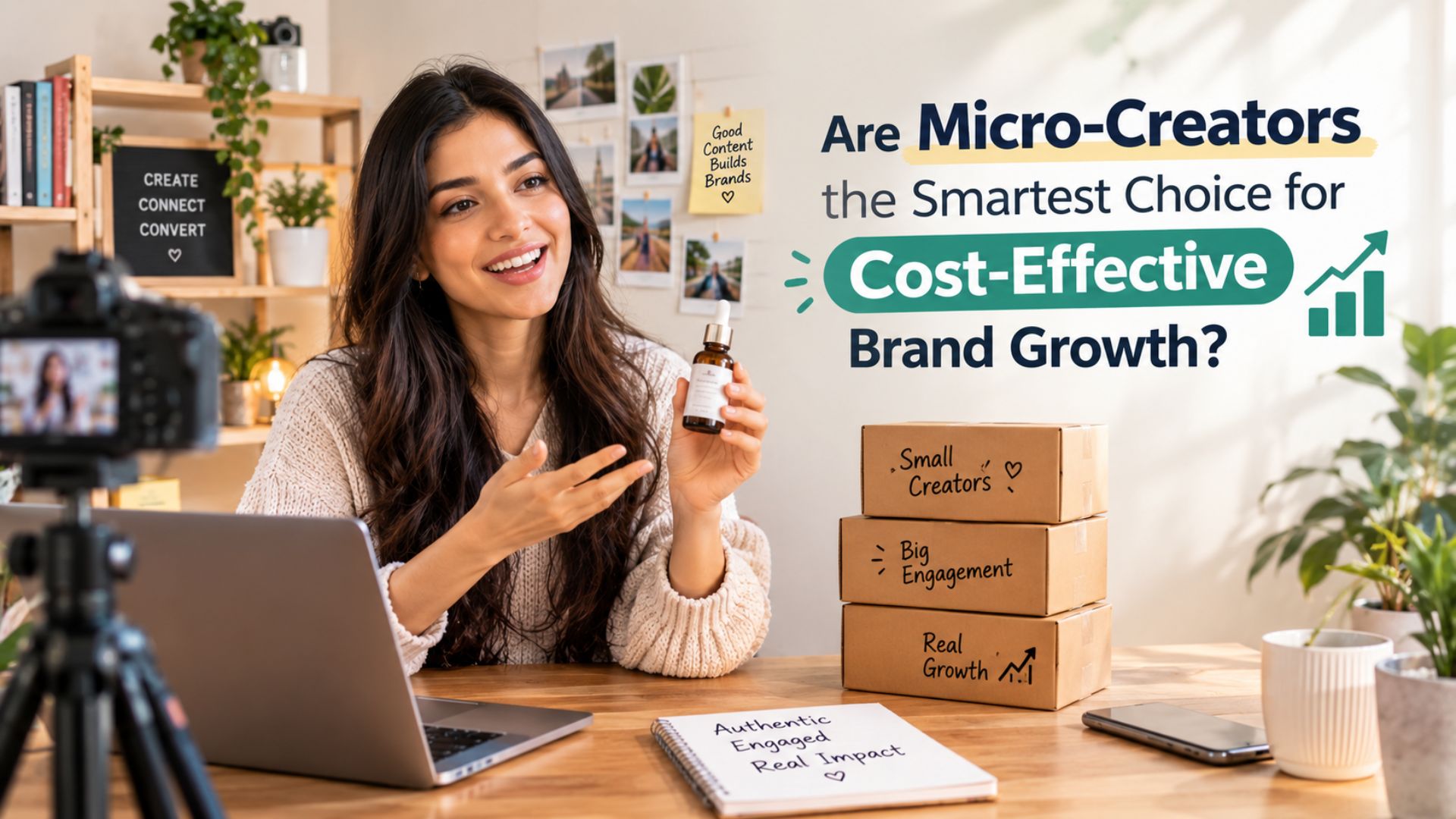
What if the most effective voice for your brand is not the creator with millions of followers? Modern audiences are increasingly selective about sponsored content, often responding better to people who feel knowledgeable, relatable, and genuinely connected to a specific community. This shift has encouraged brands to rethink how they allocate influencer marketing budgets. ***[Micro-creators](https://creatorsville.com/micro-creators-beat-celebrities/)*** can offer a practical middle ground between limited reach and expensive celebrity campaigns, particularly when a business wants meaningful engagement rather than surface-level visibility. However, choosing smaller creators simply because they cost less is not a strategy. Success depends on audience alignment, measurement, creative freedom, and realistic campaign expectations.
**What Makes Smaller Creators Valuable?**
Smaller niche creators generally build their audiences around particular interests, professions, lifestyles, or communities. Their followers may be interested in fitness, skincare, technology, parenting, finance, gaming, food, or highly specialized topics.
The real advantage is relevance. A creator speaking consistently to a focused audience may have greater persuasive potential for a specific product than a larger personality speaking to a broad and disconnected audience.
Recent industry guidance commonly places micro-level creators in roughly the 10,000 to 100,000 follower range, although definitions vary across platforms and markets. More importantly, brands should avoid treating follower count as the sole qualification metric. Audience quality, engagement patterns, content consistency, and brand relevance usually provide more useful insights.
**How Does a Smaller-Creator Campaign Work?**
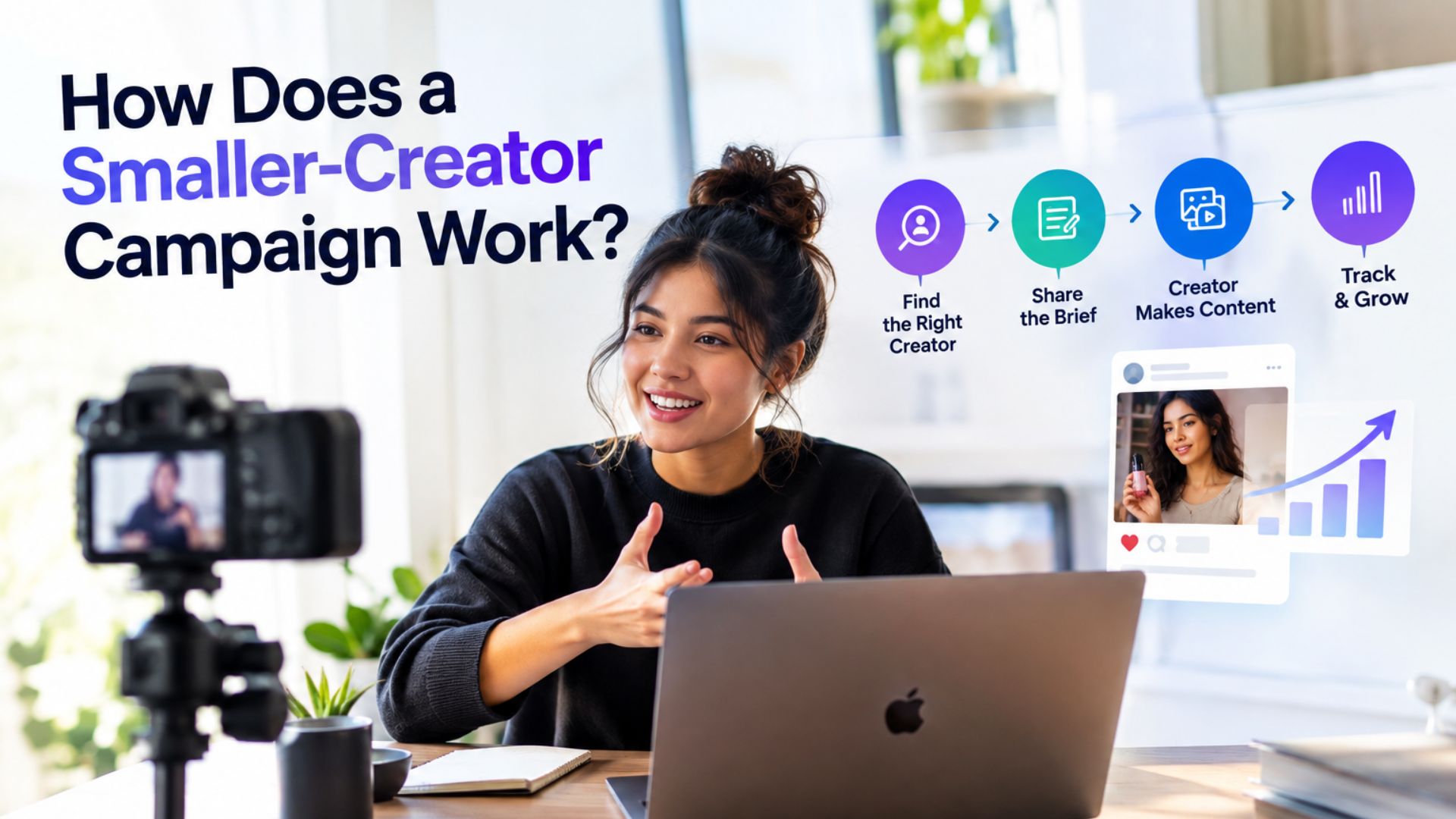
A successful campaign starts with a clear business objective. Brands should first decide whether they want awareness, website traffic, product trials, user-generated content, leads, or direct sales.
Once the objective is established, creator selection becomes easier. For example, a sustainable skincare company may benefit more from partnering with creators who regularly discuss ingredients and ethical beauty than with general lifestyle personalities who occasionally post beauty content.
The collaboration process should also leave room for authenticity. Overly scripted content often sounds promotional and can weaken the very trust that makes creator partnerships valuable.
A practical campaign should establish expectations around deliverables, timelines, disclosures, messaging boundaries, content usage rights, and performance tracking. Unique links, promotional codes, or campaign-specific landing pages can help identify which partnerships actually produce results.
The strongest approach is usually to test a small group, evaluate outcomes, and gradually expand relationships with consistently effective creators.
**What Does It Cost to Work With Smaller Creators?**
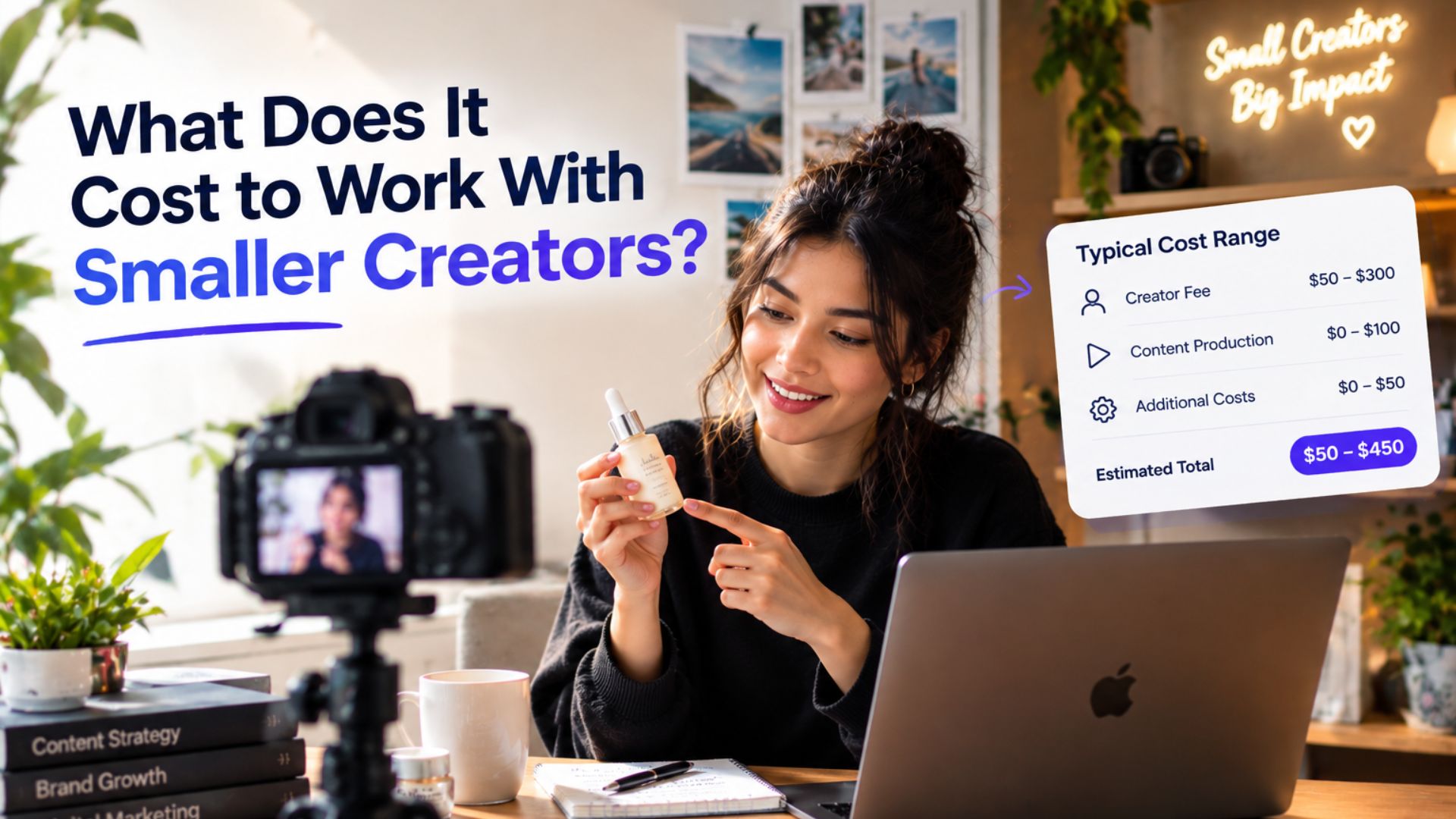
Cost varies significantly depending on platform, niche, audience location, content format, engagement quality, and usage rights. A video campaign requiring extensive production and advertising rights will naturally cost more than a simple organic post.
In India, current market estimates show substantial variation, with many campaigns involving fees ranging from thousands to tens of thousands of rupees per deliverable. These figures should be treated as planning benchmarks rather than fixed industry rules because creator pricing differs widely by category and campaign requirements.
The important lesson is that the lowest fee does not always represent the best value. A cheaper collaboration that produces no meaningful action can be more expensive than a higher-priced partnership that generates qualified traffic or conversions.
Brands should therefore calculate value using outcomes such as cost per qualified click, cost per acquisition, conversion rate, or usable content assets rather than simply comparing creator fees.
**Smaller Creators vs Larger Influencers: Which Is Better?**
Neither option is universally superior. The right choice depends on the campaign objective.
Larger influencers can provide rapid visibility and broad awareness, making them useful for major launches or mass-market campaigns. However, broader reach does not automatically translate into stronger relevance or conversion.
Smaller creators often provide more niche access and may allow brands to diversify risk across multiple partnerships. Instead of investing the entire budget in one personality, a business can test several audience segments and creative approaches.
Industry analysis increasingly emphasizes that engagement rate alone should not determine campaign success. Cost per outcome, audience fit, conversion quality, and long-term content value provide a more complete picture of performance.
The best strategy may even combine creator tiers, using broader voices for awareness while relying on niche partnerships for trust and conversion-focused campaigns.
You can also watch: ***[Say hello to Creators Ville](https://youtube.com/shorts/MPaaQ-GlR8g?si=x1QC-lMDmVyY3Htk)***
**Conclusion**
***[Micro-creators](https://creatorsville.com/micro-creators-beat-celebrities/)*** can be a powerful option for brands seeking targeted reach, authentic communication, and more flexible campaign spending. Their value, however, does not come automatically from having a smaller audience. The strongest results come from careful selection, transparent partnerships, creative collaboration, and outcome-based measurement. Instead of chasing the biggest available audience, focus on finding communities that genuinely match your customers. Start with a focused test campaign, measure what matters, and build long-term relationships with the creators who consistently deliver meaningful value.
**FAQs**
What are micro-creators in influencer marketing?
Micro-creators are niche content creators with smaller, engaged audiences. Brands value them for audience relevance, authentic content, and stronger community connections.
How much should brands budget for smaller creator campaigns?
Costs vary based on platform, niche, deliverables, and content rights. Brands should focus on campaign results rather than follower counts when evaluating value.
Are smaller creators better than macro influencers?
It depends on the goal. Smaller creators suit niche engagement and targeted campaigns, while macro influencers are often better for broad awareness and large-scale reach.